Is your dog terrified of fireworks?
If your dog panics when the fireworks start, hiding, pacing, shaking, there's a lot you can do to help them cope, and to get them used to the noise over time.
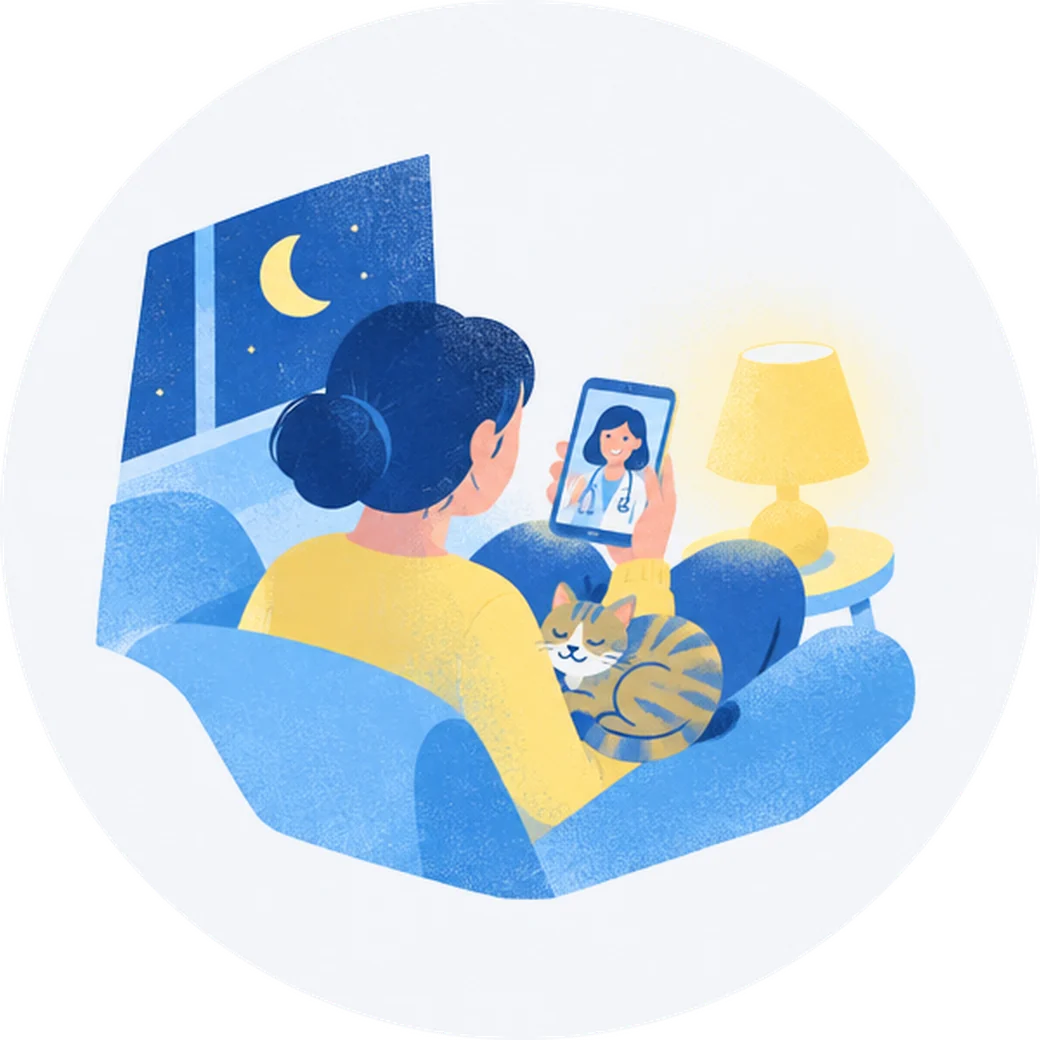
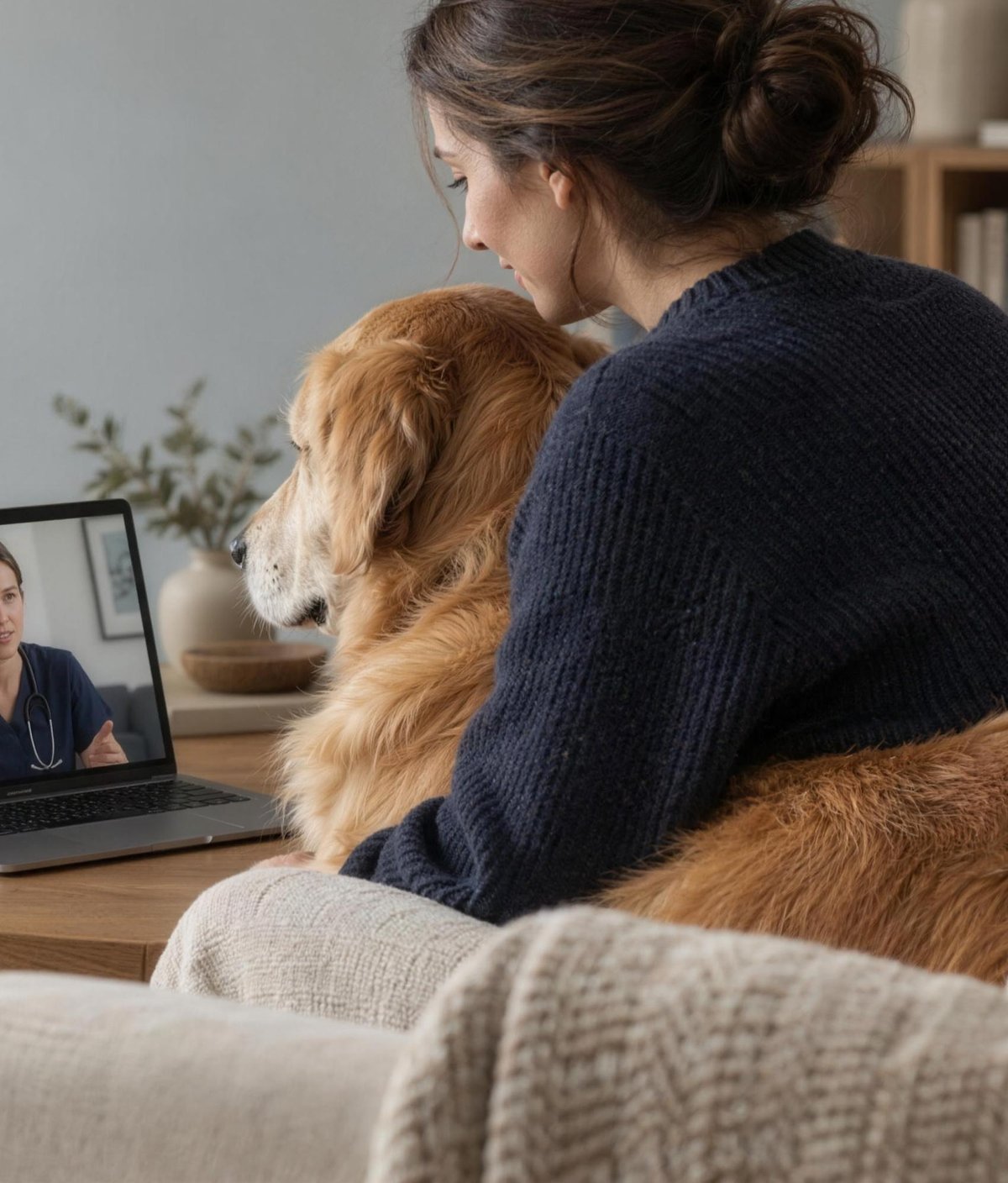
Dogs who fear fireworks are often anxious in other ways too, and a stressful trip to the vet is the last thing they need. A Lewis vet will talk it through with you by video, from home, at a time that suits you, with up to 30 minutes to really understand what's going on. Most of what helps can be started from home. If your pet does need prescribed medication, your vet will point you to a local practice for that and help you plan around it.
Why Lewis
- Up to 30 minutes by video, from home
- No app to download
- Book within 10 minutes, or schedule ahead
- A free follow-up within 12 hours if you need it
- Written notes emailed afterwards, so you have the plan to refer back to
- Consultations available in several languages, including Polish, Ukrainian, Russian, Spanish, Italian and Portuguese
- Length
- Unrushed, up to 30 minutes
- How
- Secure video or phone, no app
- When
- At a time that suits you
- Your vet
- RCVS-registered and based in the UK
- Afterwards
- Written notes and a free follow-up appointment within 12 hours
- Languages
- English, Spanish, Polish, Russian, Ukrainian, Italian and Portuguese
- Need a vet now?
- Talk to a vet now: £55, by phone, 4am to midnight every day
Fireworks and noise fear
Most people get in touch about fireworks in late October, when the first bangs start in the evenings and they realise Bonfire Night is a week or two away. Sometimes it’s a new puppy and they’ve no idea how he’ll react. More often it’s a dog who was “a bit unsettled” last year and had a terrible night by New Year’s Eve, and the owner is already dreading it. In the UK, firework season isn’t one night anymore. Between Halloween, Bonfire Night, Diwali, New Year and the odd wedding or birthday, it can stretch over weeks.
Why is my dog so scared of fireworks?
Owners usually describe it in pieces. She trembles and pants. He tries to squeeze behind the sofa or into the bath. She won’t eat her tea. He paces for hours and can’t settle even after the bangs stop. Some dogs try to dig through doors. Cats tend to vanish completely, and owners sometimes don’t realise the cat is frightened at all because they never see her.
Should I comfort my dog, or am I making it worse?
There are a few things people commonly get wrong. The first is the old advice not to comfort a frightened dog because you’ll “reward the fear”. You won’t. Fear is an emotion, not a trick. Calmly sitting with your dog, stroking them if they want it, is fine and often helps. What doesn’t help is fussing anxiously, or telling them off for hiding, barking or having an accident.
Will she just grow out of it?
The second mistake is assuming they’ll grow out of it. Noise fear tends to get worse year on year without help, not better. And the third, which I see most in older dogs, is missing that a dog who has suddenly become scared of noises this year may be in pain. Sore joints and a frightened body make each other worse.
What will the vet want to know?
If you came to me, I’d want to know how long this has been going on and whether it’s getting worse. How bad is a bad night: mildly unsettled, or panicking for hours? Is it just fireworks, or also thunder, gunshots, bin lorries and the smoke alarm? How long does it take her to recover the next day? Is she frightened in other situations, like being left alone? Has anything changed recently in her health or behaviour? And what does your home look like on the night: are there hiding places, a quiet room, a garden fence she could get over?
What can I do before we speak?
Before we speak, it really helps if you can film a few minutes of how she behaves when fireworks are going off, or even when a firework video is played quietly on your phone. Note how long it takes her to settle afterwards. And notice where she naturally chooses to hide, because that’s where her den should be.
How do I get my dog through this firework season?
For this season, the practical things matter most. Walk her well before dark. Shut curtains early, put the television or some steady music on to blur the bangs, and set up a den where she already likes to go: a crate or a space behind the sofa covered with a blanket, with her bed and a few chews. Let her choose whether to go in. Make sure the house and garden are secure, take her out on a lead even in your own garden, and check her microchip details are up to date, because fireworks are one of the most common reasons pets go missing. Keep cats indoors with a litter tray, and bring small pets like rabbits and guinea pigs inside or cover their hutches well.
What actually helps calm a dog during fireworks?
Alongside that, there’s a whole range of options to talk through. On the complementary side, some owners find pheromone diffusers, calming supplements, snug-fitting pressure wraps or specially designed music helpful. The evidence for each is mixed and every dog responds differently, so I’d treat them as part of a plan rather than a cure. On the conventional side, dogs with more severe fear may benefit from prescribed medication, which needs an in-person assessment by your own vet. Those need arranging and trialling well ahead of the night itself, not on the day, so this is a conversation to have now.
Can my dog be cured of firework fear?
The longer-term fix is a sound desensitisation programme: very gradually getting her used to firework noises played at low volume while something pleasant happens. This genuinely works for many dogs, but it takes weeks to months. The best time to start is in the quiet months after the season, so you’re ready for next year.
How much help does my dog need?
How much help she needs really does depend on your dog. A mildly unsettled dog who settles with a den and a chew is a different story from one who panics for hours and hurts herself. It depends on whether this is getting worse, whether she’s scared of other things too, whether there’s pain in the background, and how much she can be shielded at home. It also depends on timing: what’s realistic two weeks before Bonfire Night is very different from what’s possible in February.
From a consultation
A family with a five-year-old collie cross got in touch after a bad New Year’s Eve, when she’d chewed through a door frame. We talked through a den, a calmer routine on the night, and a conversation with their own vet about whether medication was right for her. In January they started a sound programme, a few minutes a day. By the following autumn she was still unsettled when fireworks started, but she took herself to her den and was asleep within half an hour. Not perfect, but a completely different night for everyone.
When not to wait
But if she has injured herself while panicking, has escaped, has eaten something she shouldn't while distressed, or is still panting heavily and unable to settle hours after the noise has stopped, she needs to be seen by a vet in person today.
The next step
The next step is to talk it through before the fireworks start, not after. Book a consultation and we'll build a plan while there's still time to put it in place.