When an online vet is helpful for your pet
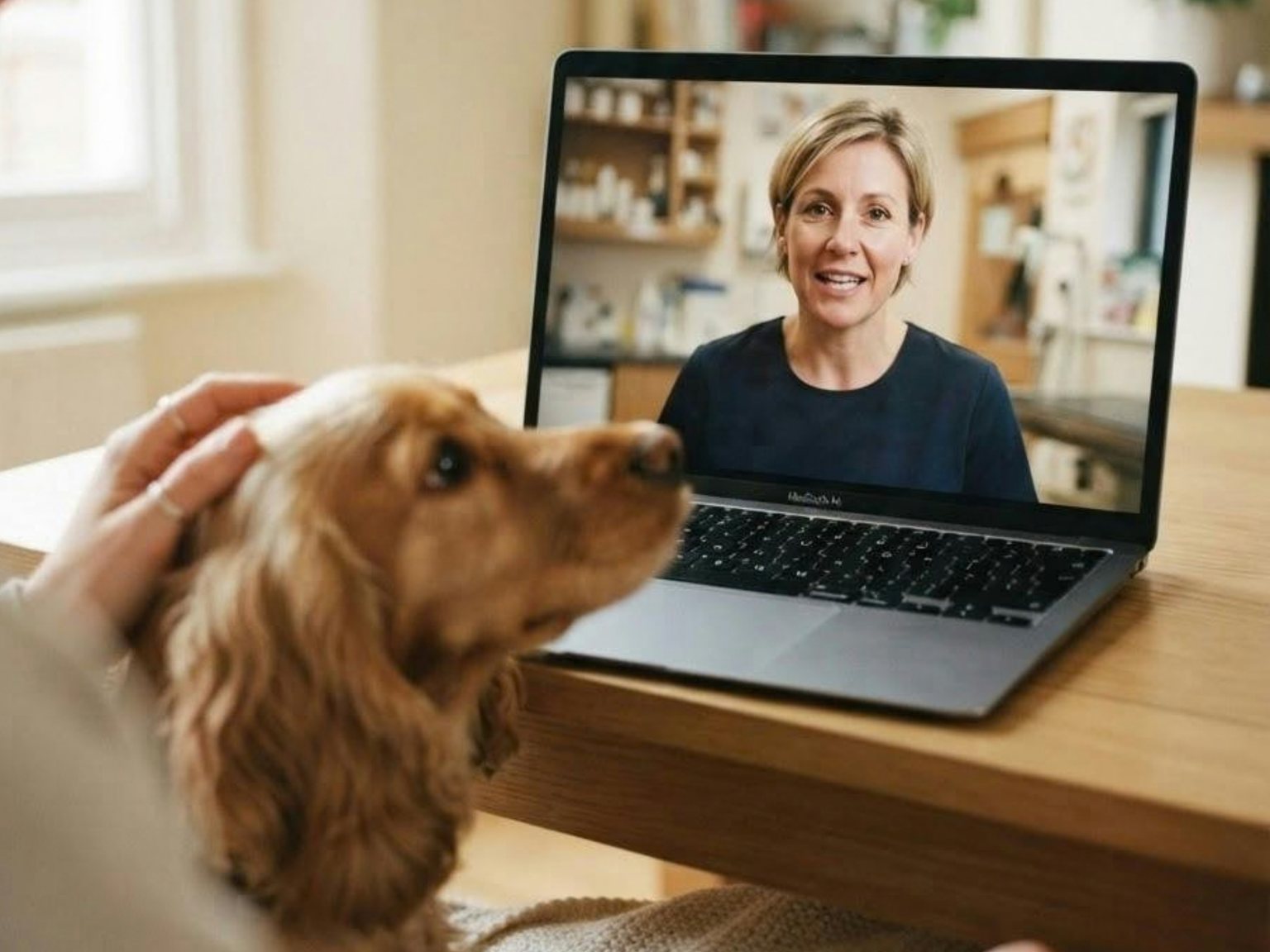
A lot of vet appointments happen in a ten or fifteen-minute slot. That’s fine for a booster or a quick check, but it can feel very short when you’re trying to take in a new diagnosis, or you’ve got a list of questions and a dog who won’t stay still on the table. Most of us have walked out of a consulting room and remembered the thing we meant to ask once we’re back in the car.
An online vet gives you room for that longer conversation, from home. A consultation with a Lewis Vet runs for up to 30 minutes by video or phone, and it’s there to work alongside your usual vet rather than replace them.
When you want more time to talk
Sometimes nothing is urgent and you simply want to understand what’s going on. You might have blood test results you don’t quite follow, or a diagnosis you’ve been reading about online until midnight. Have your paperwork in front of you and your questions written down, and we’ll go through it with you at your pace.
You’ll get an email summary of the consultation afterwards, which you can share with your usual vet, and if anything comes up once the call has ended, you can book a free follow-up appointment within 12 hours.
Getting a second opinion
Second opinions are normal in human medicine, and there’s no reason pets should be any different. You may have been told your dog needs an operation and want to understand the alternatives, or your cat has been on treatment for months without much change and you’d like a fresh pair of eyes on it. A Lewis Vet can look through the notes and results you’ve been given, ask about your pet’s history and talk through what else you could raise with your practice.
It’s understandable that owners want to feel sure before they commit to treatment. The Competition and Markets Authority’s final report on the vets market, published in March 2026, found average prices at UK vet businesses rose by 63% between 2016 and 2023, nearly twice the rate of general inflation. You can ask for one without falling out with your practice, and you’ll go back to them knowing what to ask. If you’d like an independent view, have your notes and results to hand when you book a call and the vet can go through them with you.
Talking to a vet in your own language
Lots of UK pet owners grew up speaking another language at home. The 2021 Census found 5.1 million people in England and Wales have a main language other than English, with Polish the most common at 612,000 people.
Our vets offer consultations in English, Spanish, Polish, Russian, Ukrainian, Italian and Portuguese, and we’re recruiting more. We want good vet care to be easy to reach, whatever language you speak at home, and talking about your pet’s health in the language you’re most comfortable in makes the whole conversation easier. Just let us know which language you’d prefer when you book.
Out-of-hours worries without the emergency bill
It’s ten o’clock at night, your dog has eaten something odd on a walk, or your cat has been sick twice and is now hiding under the bed. Your usual vet is closed. Until recently your choice was to sit up worrying or drive to an emergency clinic and pay an out-of-hours fee, which can run into hundreds of pounds before any treatment starts.
You can book a video consult at a time that suits you, and if a vet is free you can sometimes book a same-day call with as little as 10 minutes’ notice. A Lewis Vet can help you work out whether it’s safe to wait until your practice opens in the morning or whether your pet needs to be seen tonight. With the PDSA’s latest PAW Report finding more than half of owners are worried about affording vet care, knowing which of those you’re facing can save you a lot of money and a sleepless night.
If your pet is struggling to breathe, has collapsed, is having a seizure or is straining and can’t wee, don’t book a video call. Go straight to your nearest emergency vet.
Holistic and natural remedies
Many owners are curious about complementary therapies, and some feel awkward bringing them up at the practice. Our vets are happy to talk about supplements, acupuncture, laser, regenerative therapies, and herbal or homeopathic options alongside conventional treatment. They’ll give you advice on what the evidence supports and check whether anything could interact with medication your pet already takes, so you can make an informed decision about your pet’s treatment. It’s a good place to start if you’ve been reading about a supplement or remedy and want a vet’s opinion before you try it. If we’re not able to answer your questions, we’ll happily refer you to a local practice that can.
Living with a long-term condition
Arthritis, kidney disease, diabetes, allergies and heart conditions all need managing over months or years, and the questions don’t always line up with your next check-up. You might wonder whether a new behaviour is a side effect, or whether your dog drinking more this week is something to raise at the next appointment. A video call is a handy way to get those answered without bringing a pet into the practice every time, which matters a great deal for animals who find the journey stressful. If you’ve got a list of questions building up between check-ups, a call with a Lewis Vet is a good way to work through them.
Quality of life
Some of the hardest conversations owners have are about an older or poorly pet and how they’re coping day to day. You may want to know whether their pain is under control, how to make home easier for them, or how to recognise when they’re having more bad days than good. Those conversations deserve time and quiet, and having them at home, with your pet asleep beside you, can make them a little easier. If that’s where you are, you can book a call for a time when the house is quiet and talk it through without feeling rushed. We’ve written more about caring for an older pet if that’s where you are right now.
Nutrition, including raw feeding
Diet questions come up all the time: a dog who’s gaining weight, a cat with a sensitive stomach, itchy skin that might be food-related, or whether to switch to fresh, home-cooked or raw food. Our vets will talk raw feeding through without judgement, including whether your pet’s diet is complete and balanced and how to make the change gradually. For some conditions a prescription diet is the better option, and they’ll tell you if they think that applies to your pet. Talking it over before you switch can save a lot of trial and error, and an upset stomach or two along the way.
If you do feed raw, the Food Standards Agency’s guidance is a useful starting point for handling it safely at home. It advises washing your hands with soap and hot water after preparing it, keeping it away from food for the family, storing it on the bottom shelf of the fridge and keeping children under five away from it altogether.
When your pet needs to be seen in person
There are things a video call can’t do, like listen to a heart or feel a lump, and we won’t pretend otherwise. If we think your pet needs a hands-on examination, we’ll tell you plainly and point you to a suitable local practice, with a written summary of the consultation to take with you.
If any of this sounds familiar, you can read more about how a consultation works or book a time with one of our vets.
Time to talk it through with a Lewis vet
£52 for an unrushed video consultation with a UK registered vet at a time that suits you, or £55 to talk to a vet now, from 4am until midnight every day.
Book a video consult Talk to a vet now