Not sure if it can wait until morning?
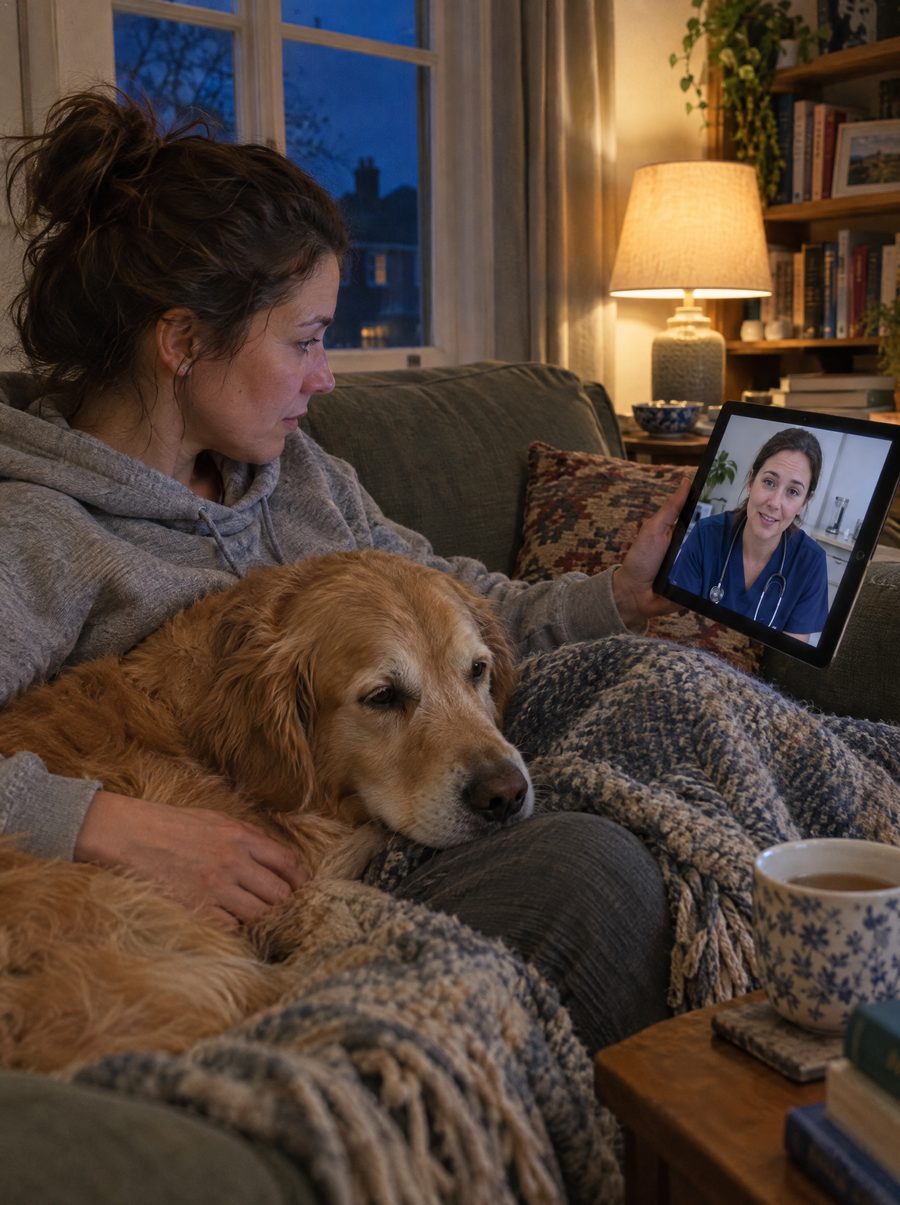
If something isn't right with your pet tonight and you can't tell whether it needs an emergency vet or can wait, you don't have to make that call on your own. A Lewis vet can talk it through with you by video, from 4am until midnight every day, and help you decide with good information rather than guesswork.
A consultation gives you up to 30 minutes with a vet, from home, with no app to download. If it turns out your pet does need to be seen in person, your vet will tell you plainly and help you work out where to go. If it can safely wait, you'll have a clear plan for the night and know exactly what to watch for.
Why Lewis
- A vet by video, 4am to midnight, every day
- Up to 30 minutes, from home, no app to download
- Book within 10 minutes, or schedule ahead
- Honest advice on whether your pet needs to be seen in person
- A free follow-up within 12 hours if you need it
- Written notes emailed afterwards, so you have the plan to refer back to
- Consultations available in several languages, including Polish, Ukrainian, Russian, Spanish, Italian and Portuguese
- Length
- Unrushed, up to 30 minutes
- How
- Secure video or phone, no app
- When
- At a time that suits you
- Your vet
- RCVS-registered and based in the UK
- Afterwards
- Written notes and a free follow-up appointment within 12 hours
- Languages
- English, Spanish, Polish, Russian, Ukrainian, Italian and Portuguese
- Need a vet now?
- Talk to a vet now: £55, by phone, 4am to midnight every day
Can this wait until morning?
It’s usually about half past ten at night. The surgery closed hours ago, the children are in bed, and something isn’t right. The dog has been sick twice. The cat is hiding under the bed and won’t come out. The puppy has eaten something off the kitchen floor and you’re not sure what. You’ve already searched online and found answers ranging from “completely normal” to “go immediately”, and you’re sitting with your phone trying to work out which one applies to you.
The question underneath is almost never just medical. It’s also: the out-of-hours vet is forty minutes away, it will cost several hundred pounds before anyone has done anything, and I don’t want to drag a frightened animal across the county for nothing. But I also don’t want to be the person who waited.
Am I overreacting?
I want to say this first, because owners rarely hear it: worrying about cost and distance doesn’t make you a bad owner. It makes you a normal one. The goal is to make that decision with good information rather than in a panic. If you’re not sure, that’s exactly the moment to talk to someone, and it’s what a Lewis vet is here for.
Why dramatic doesn’t always mean serious
The most common mistake is to judge urgency by how dramatic something looks. A cut paw that bleeds all over the kitchen floor looks terrifying and is often fine until morning once it’s been bandaged. A male cat quietly going in and out of the litter tray, straining and producing nothing, looks like very little and can become life-threatening within hours. A deep-chested dog who is restless, trying to be sick and bringing nothing up, with a tight, swollen tummy, may look as if he just has indigestion. That situation can’t wait. Quiet can be more worrying than loud.
The other common mistake is waiting to “see how they are in the morning” without deciding what you’re watching for. If you’re going to wait, you need to know what would change your mind.
What a Lewis vet will ask you
If you rang me, these are the questions I’d ask. What exactly has happened, and when did it start? How old is your pet and what breed? Have they eaten anything unusual, or could they have got into medicines, chocolate, raisins, xylitol in sugar-free products, lilies if you have a cat, rat bait or antifreeze? Are they breathing normally, and what colour are their gums? Can they stand and walk? Are they drinking? When did they last pass urine? Have they vomited or had diarrhoea, how many times, and is there any blood? Do they have any existing conditions? And what are they doing right now, compared with an hour ago?
What you can check while you decide
While you’re deciding, there are things you can usefully check. Look at the gums: pink is reassuring, while pale, grey, blue or bright red is not. Count breaths for thirty seconds while your pet is resting. Note the time of everything: each vomit, each trip to the tray, the time they ate whatever they ate. If something has been swallowed, find the packaging and keep it. A short video of anything odd, like a wobble, a twitch or the way they’re breathing, is worth more than a description. And don’t give any human medicines, or try to make them sick, unless a vet tells you to.
So, can it wait?
The honest answer is very often “it depends”, and it’s worth knowing what it depends on. It depends on the animal: a young, healthy dog with one bout of sickness is a very different picture from an elderly cat who already has kidney trouble, or a tiny puppy who can dehydrate quickly. It depends on the direction of travel: something that’s stable or improving can usually wait, while something getting steadily worse over an hour or two usually can’t. It depends on what was eaten, how much and how long ago, because for some poisons the window to act is short and the first hours matter most. And it depends on whether you can actually monitor overnight, because waiting only works if someone is watching.
That’s why a conversation helps more than a checklist. A list can tell you that vomiting is sometimes urgent. It can’t weigh up your particular dog, tonight, against everything else you’ve told me. That’s exactly what a Lewis vet can do with you.
From a consultation
A woman phoned about her nine-year-old cat, who had been in and out of the litter tray all evening. She assumed it was an upset tummy and planned to ring her vet in the morning. When I asked her to look properly, he was straining and producing almost nothing, and he’d started crying. I told her plainly that he needed to be seen that night, and helped her find the nearest emergency clinic. She told me later that she’d nearly gone to bed. On the other hand, I’ve spoken to plenty of owners whose dog had a single bout of sickness after raiding the bin, was bright and drinking, and was perfectly fine to watch at home with clear instructions about what would change the plan. Both are the right answer for that animal.
If you do decide to wait
If you’re waiting until morning, agree a plan with yourself before you go to bed. Decide what would make you go in, check on your pet at set times, and keep them somewhere you can hear them. Ring your own practice as soon as it opens. A Lewis vet can help you set that plan so you’re not guessing in the dark.
When not to wait
But some things should never wait. Difficulty breathing, collapse or not being able to stand, pale or blue gums, a seizure lasting more than a few minutes or several in a row, a swollen tight tummy with unproductive retching, straining to pass urine with nothing coming out, suspected poisoning, heavy bleeding that won't stop, severe pain, or being hit by a car even if they seem fine. If any of those fit, go to your nearest emergency vet now and ring on the way.
Talk it through tonight
If you're sitting there unsure, that's the moment to speak to a vet. A Lewis vet can talk it through with you now, help you decide whether your pet needs to be seen in person, and give you a clear plan either way.